“At the end of this century, Africa will have a population of about 1.4 billion people... 144 more than lived in 1950 in cities. That population will capture a warm pace of urbanization, which is higher more than in Europe. Some 7,000 cities more have already been born. To accommodate that workforce without a rise in the rate of unemployment, it will be necessary in the next 15 years almost to double the number of jobs in Africa. Moreover, if current trends, the urban population will reach 3 to 10 million by 2050, over three fourth of the total population, compared to only 3 million in 150 in 1980, Unless new workers can be attracted in large numbers to jobs in smaller urban centers and on prosperous farms, it will be necessary to meet at least ten times the size of present-day Nairobi, or to watch Mombasa and Nairobi expand into cities of two to four million each, and... almost those warning on terms and on rural common continue to stand to predict fully, the new perimeters will be plagued by uneven access tracks of the land, expansion into marginal areas, falling average incomes, and food shortage.”
Quoted above is the first paragraph of the first chapter of the sessional paper no. 1 of 1986 economic management for renewed growth, the chapter itself as titled ‘kenya in 2000’. Following the economic crises of the 70s and the early 80s, experts saw the need to look much further ahead, towards the end of the century to determine what kind of an economy Kenya is going to have and how it is going to get there. Then, they drafted this document.
We’ll focus on the statements that make reference to the population of Nairobi. The prediction was that workers be allocated in large numbers to jobs in smaller urban centers and on prosperous farms. But unfortunately, that did not happen. Nairobi then grew into a city of close to four million, all without the necessary infrastructure to accommodate them.
The population in Nairobi has ballooned ever since the turn of the century. As the paper above predicted, more and more people have made their way to the city in search of employment opportunities. Whether or not they have succeeded in doing so is neither here nor there. What remains as fact is the reality of their housing.
For purposes of convenience, the working class usually prefers to live closer to their place of work. In the case of Nairobi then, the main commercial areas include the Central Business District, Westlands and Upper Hill. To satisfy the housing demands of these people then, there has been a correspondent surge in the supply of houses in areas in close proximity.
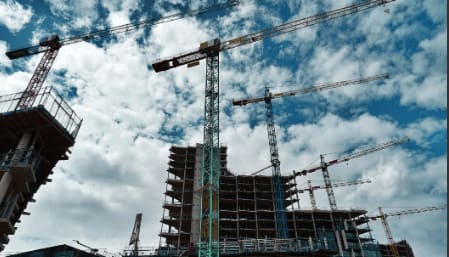
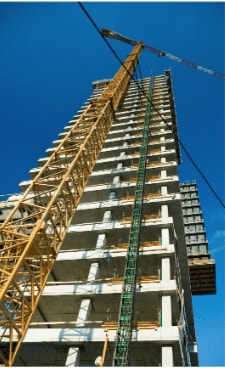
We have witnessed construction of high rise apartments in Parklands, Kilimani, Kileleshwa, and along Ngong Road. While we understand the purpose, data are revealing some anomalies people do not approve of the conditions under which they are being constructed.
It is important to note that most, if not all, of these residential areas were designed during the colonial era, therefore, the roads as well as the drainage and sewerage systems were designed to serve the meager population of the time.
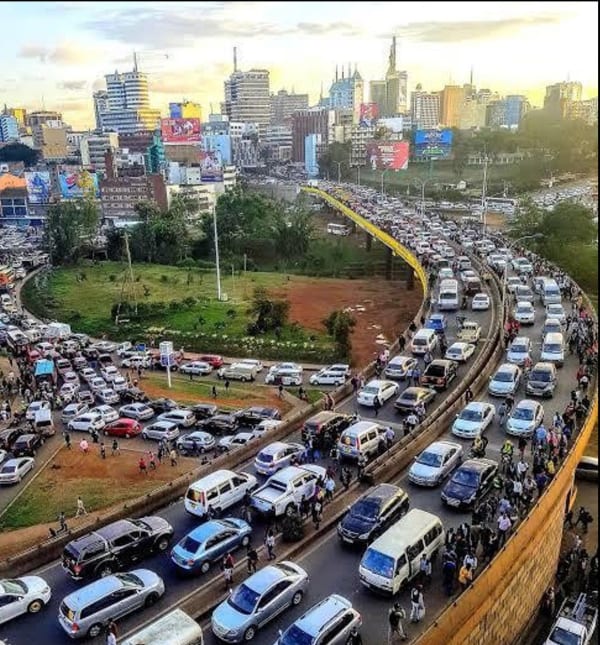
But now, we have a huge increase in the number of residential units per plot with no correspondent increase in the drainage and sewage systems. What we witness, then, is an increase in traffic jam in those areas. This is, for example, evident in both Parklands Avenue.
The areas also experience prone flooding when it rains since most of the drainage pipes have been blocked during construction. At the beginning of the year, the whole stretch of Wood Avenue, from its intersection with Argwings Kodhek road to its intersection with Chania road, was a construction site. As a bon mot, it even earned the nickname 'Pipeline ya mabanyas' to mean that it was just like Pipeline, but for wealthier folks. All contractors would use the sidewalks as their storage for materials on site, thus leaving soil which ended up blocking the drainage lines. When it rained, the water had nowhere to go, thus ended up flooding on the road.
The environmental issues don’t even end there, seeing that huge tree cover has to be cut down in order to provide room for the apartments. Green Belt came out guns blazing recently to protest the construction of a high-rise apartment along Jomo Road because of how the contractor anxiously cut all trees that were nearby. If the west of Uhuru highway – the only part of the city that has tree cover – is being torn down, then how would Nairobi maintain its tag as ‘The Green City under the Sun?’
The last opposition to these high-rise apartments are people we’d refer to as NIMBYs (Not In My Back Yard). This is real resistance to mean those residents who are opposed to developments/construction happening close to their homes, for the sole reason that these developments cause harm to them in one way or the other.
The areas in context here also have NIMBYs, who state that they bought property in that area because there were zoning laws that provided height restrictions for buildings.
The high-rise apartments, then, infringe this law, and additionally, infringe on the privacy of the older residents since the tenants of the apartments will be at a vantage position to peek over the older residents’ houses at all times. An influx of high-rise apartments in the area will also lead to a decline in the value of land and property in that area.
Therefore, with all these factors mentioned above in mind, is it possible to solve them all and find a way to build more high-rise apartments in close proximity to the CBD (without making Nairobi looking like a town in the USSR) in order to satisfy this demand? Or should we focus on the other alternative – building far away and ensuring ease of movement to the CBD?