Remote sensing, the science of collecting data about the Earth's surface without direct contact, has revolutionized the agriculture and disaster management industries. Satellites, drones, and aircraft which are equipped with advanced sensors, capture detailed images and data, offering invaluable insights into environmental changes and urban growth. However, as this technology advances, so do the ethical concerns surrounding its use.
The ability to observe and analyze locations remotely raises pressing questions about data privacy, security, and accessibility. Who owns the images captured from space? Who has the right to access them? How can governments, corporations, and private individuals misuse this powerful technology?
This article explores the ethical dilemmas that arise from remote sensing and its impact on personal privacy, national security, and global accessibility.
How Remote Sensing Works
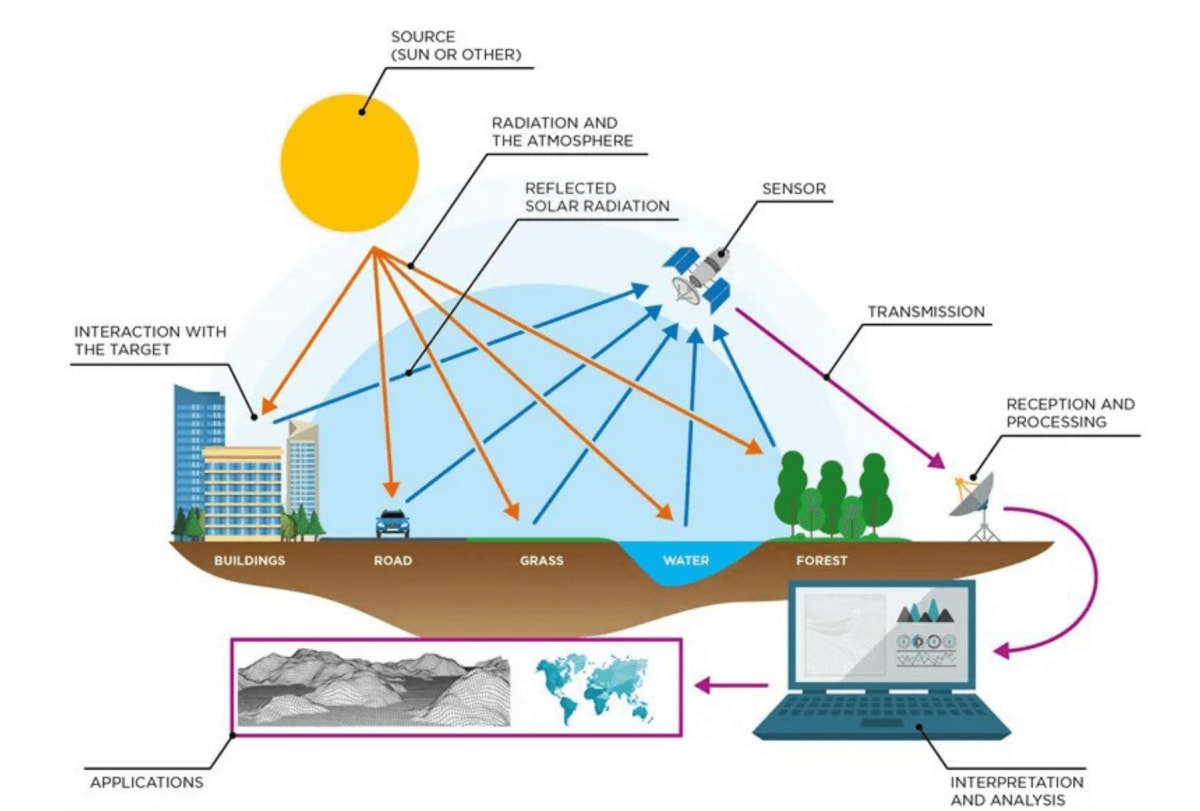
Remote sensing involves the use of sensors mounted on satellites, aircraft, or drones to detect and measure reflected or emitted radiation from the Earth's surface. These sensors operate across various spectral bands, including visible, infrared, and microwave, allowing for the detection of objects, terrain variations, and even heat emissions.
The systematic approach that follows of acquiring data, processing it, analyzing it, and making sound decisions from the information obtained makes remote sensing a powerful tool, but it also introduces vulnerabilities, particularly concerning privacy and security.
Privacy Concerns: Who Is Watching?
One of the most significant ethical dilemmas of remote sensing is its impact on personal privacy. The finest of details such as the license plate of a car or activities in a private backyard are easily captured by the use of high resolution satellite imagery and drone surveillance. This capability raises serious concerns to the crowd on how their data is utilized by the higher authorities. Unlike traditional surveillance methods, which require warrants or legal oversight, satellite based remote sensing often operates in a legal gray area, making it difficult for individuals to challenge unauthorized observation.
Security Risks: National and Global Implications
The accessibility of remote sensing data presents national security risks. Although governments heavily rely on satellite reconnaissance for intelligence gathering and defense operations, the democratization of satellite imagery has introduced new challenges such as possible space pollution, potential exploitation of the imagery by terrorists, and even the susceptibility of this recorded data to hacking. With more private companies launching satellites, the risk of sensitive data falling into the wrong hands increases, making cybersecurity an urgent concern in remote sensing ethics.
Data Accessibility: Who Controls the Information?
Remote sensing data is a valuable resource, but not all countries and organizations have equal access to it. Wealthier nations and large corporations dominate the satellite industry, leading to concerns regarding data monopolization and information control. If it is to be assumed that most private satellite companies prioritize profits over value, then this critical information would be limited in access to charitable and insightful works which would be done by researchers, journalists, and some small organizations.
This ends up raising ethical concerns about fairness, as the power to observe and analyze the world remains concentrated in the hands of a few entities.
Potential Solutions: Striking a Balance
To address these challenges, policymakers, scientists, and legal experts must work together to establish guidelines for responsible remote sensing. They could establish stronger, clearer regulations on data collection and distribution to avoid misuse, facilitate easy access of the relevant information to countries and smaller corporations to ensure fairness and transparency, and lastly, ensure that cybersecurity enhancements are put into effect to ensure that data is protected from hacking and unauthorized access.
Conclusion
Remote sensing is an incredible technological advancement with immense potential to improve disaster response, environmental monitoring, and urban planning. However, without ethical considerations, it can also become a tool for privacy invasion, security breaches, and data monopolization