
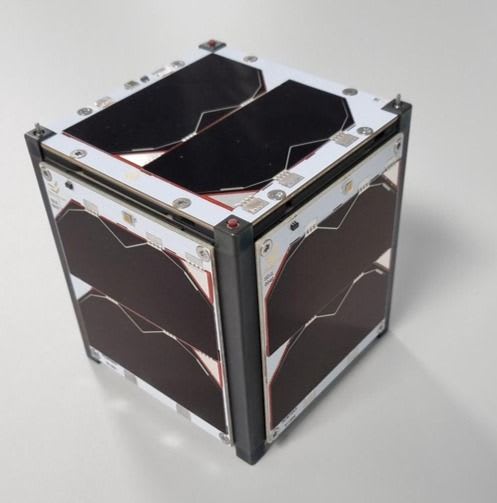
Tunisia prepares Sousse clean room for its first university CubeSat
A 12-square-metre clean room is being prepared in Sousse, Tunisia, to assemble and test the country's first university CubeSat, as first reported by Space in Africa in an analysis published on 26 November 2026.
The piece frames the facility as part of a longer-term effort to build space engineering capability through university research, with the satellite itself treated as a by-product of that skills base rather than the main goal. It draws comparisons with the South African experience of growing space capacity through universities.
The Sousse facility builds on earlier work at the Centre for Research in Microelectronics and Nanotechnology (CRMN) at the Sousse technopole. That centre ran the FACT project (Fabrication and Applications of CubeSats in Tunisia), which aimed to create CubeSat integration and test capacity and was funded through the national research ministry's PAQ Collabora programme. Partners included the University of Monastir's uEi laboratory, the national mapping and remote-sensing centre (CNCT) and the robotics firm ENOVA Robotics.
Further details, such as launch timing, funding, payload and the university involved in the new satellite, were not available at the time of writing.
Why it matters: Local assembly and testing capacity lets African universities train engineers and build small satellites without sending hardware abroad. Tunisia's approach, building skills first, offers a template for other North and West African institutions planning EO or communications CubeSats.
Sources: Space in Africa