
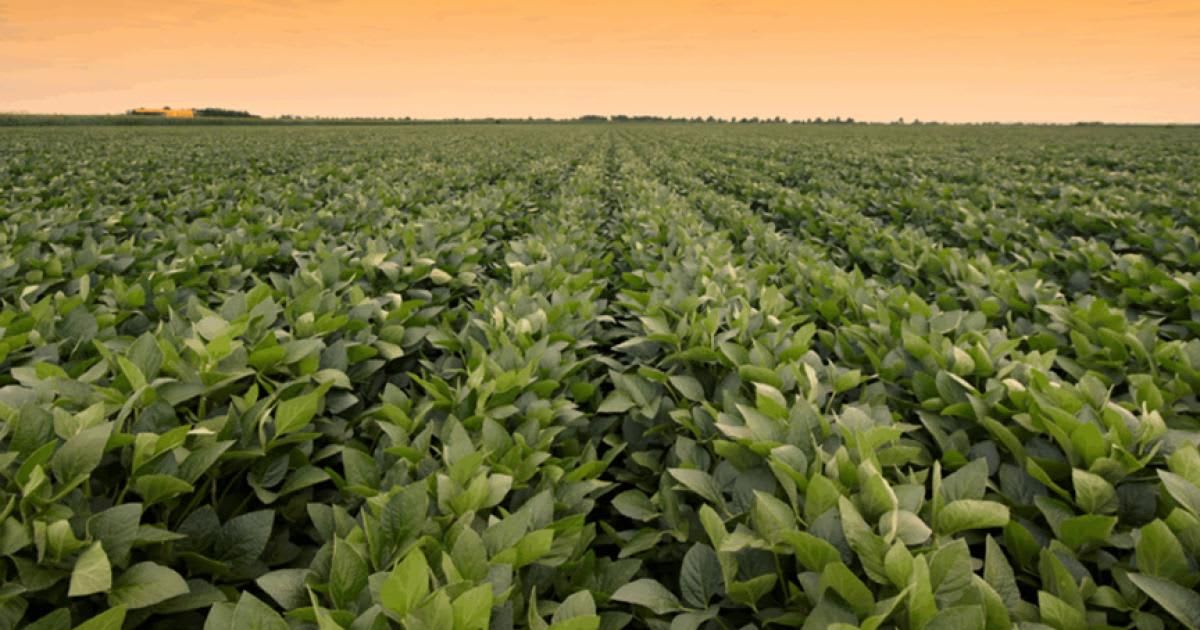
M-Net uses satellite viewing angles to improve soybean yield estimates
Researchers from China Agricultural University, Pacific Northwest National Laboratory, KU Leuven and Southwest Jiaotong University have developed M-Net, a physics-guided deep learning framework for soybean yield estimation. The work was published online in the Journal of Remote Sensing on 3 August 2026.
Instead of normalising away differences caused by sun and sensor geometry, M-Net uses BRDF-derived features to describe canopy structure, and combines them with solar-induced chlorophyll fluorescence through attention and temporal-learning modules.
Tested across 613 US soybean-growing counties, the best configuration, combining fluorescence, multi-angular MODIS vegetation indices and leaf area index, reached R² of 0.69. Multi-angular MODIS structural data alone gave 0.64, ahead of fixed-angle Sentinel-2 at 0.56. The authors say validation beyond the US is still needed.
Why it matters: Results suggest angular information in coarse-resolution sensors can outperform finer fixed-angle imagery for regional yield estimation. If the method transfers beyond the US, it could support crop monitoring and insurance where ground yield data are scarce, including in African farming systems.