
Two new algorithms improve GNSS noise analysis for time series with data gaps
A team from Chinese institutions, including China University of Mining and Technology and Jiangxi University of Science and Technology, together with Portugal's University of Beira Interior, has published two modified first-differenced maximum likelihood algorithms in Satellite Navigation (5 October 2026). They target GNSS coordinate time series with missing values. Standard first-differencing discards two differences per missing epoch; the new methods keep valid differences that span gaps. One uses a linear transformation matrix, the other a marginal likelihood that treats missing observations as latent variables.
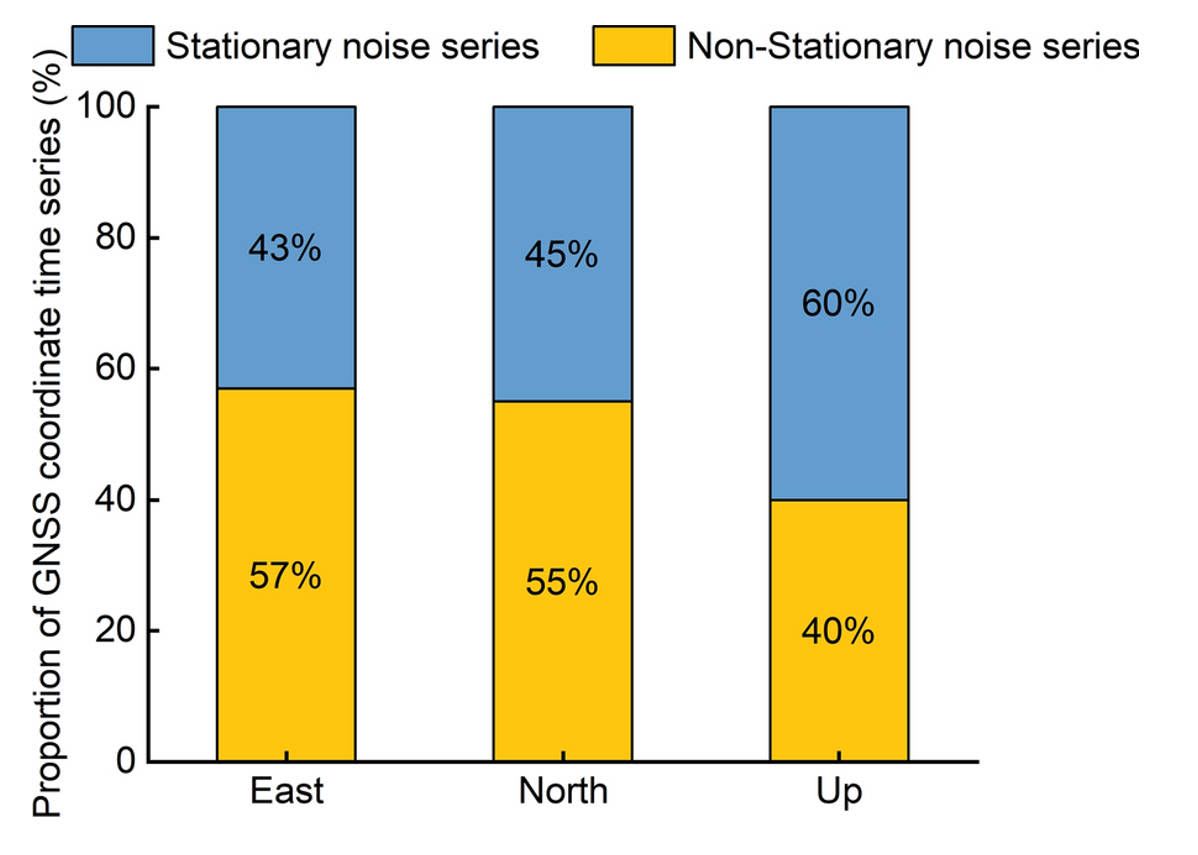
Tests used 10,800 simulated series and 180 real series from 60 global sites. The two methods gave near-identical estimates (correlation 0.9999) and beat standard approaches under non-stationary noise and heavy missingness. The marginal likelihood version was generally faster below about 60% missing data; the linear transformation version was faster above that.
Why it matters: More reliable noise models and velocity uncertainties from gappy GNSS records help geodesists studying tectonics, deformation, water storage and landslides. This matters where station data are often interrupted, and the method suits large archives.