
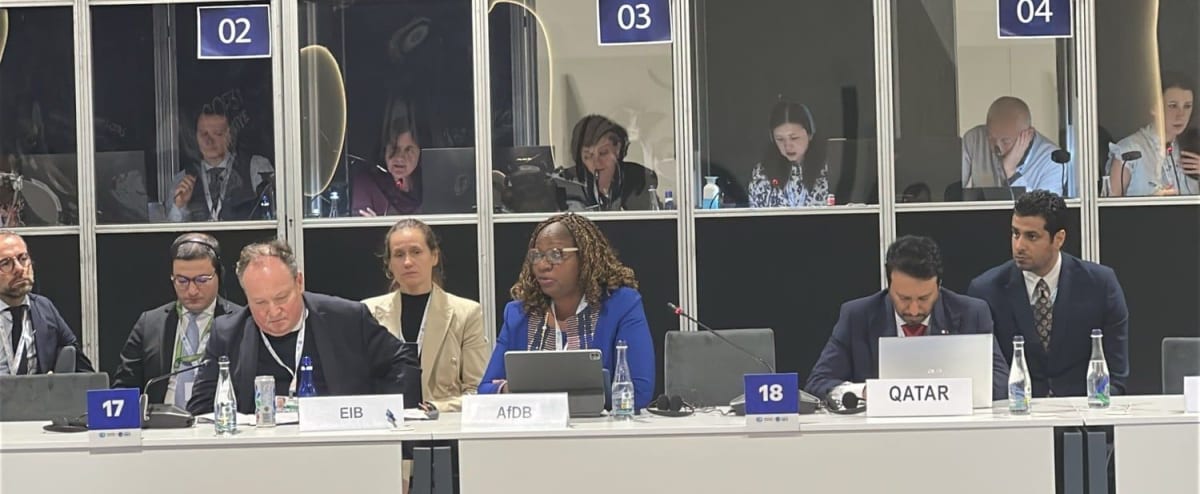
AfDB says backed early warning systems protect 42 million Africans
African Development Bank Group Senior Vice President Marie-Laure Akin-Olugbade told a COP31 leaders' session in Antalya that early warning systems backed by the Bank now better protect more than 42 million people in Africa. The session was convened by UN Secretary-General António Guterres, and she spoke for Bank President Sidi Ould Tah. She reaffirmed support for the UN's Early Warnings for All initiative.
The Bank runs three programmes. The Climate Action Window has an initial portfolio of 41 projects worth US$321.75 million, intended to raise early warning coverage from six to 12 countries and rehabilitate 344 weather, climate and hydrological stations. The ClimDev Special Fund financed 18 projects in 17 countries in 2011-2023, including five regional climate centres. The Africa Disaster Risk Financing Programme (ADRiFi), run with African Risk Capacity, helps governments arrange risk finance in advance.
Examples include a US$5 million grant modernising early warning and flood mapping for about 700,000 people in Freetown, Sierra Leone, and ClimDev-funded automatic agro-climatic stations in Côte d'Ivoire. A second ClimDev-Africa phase aims to mobilise US$191 million. Beyond 2027, the Bank plans to step up finance mobilisation through its NAFAD initiative, working with the Systematic Observations Financing Facility and the Alliance for Hydromet Development.
Why it matters: Funding for weather, climate and hydrological stations, flood mapping and regional climate centres creates demand for observation data, hazard mapping and forecasting skills. Practitioners in the 12 target countries and in regional hubs may find related project work as these portfolios roll out.
Sources: African Development Bank Group