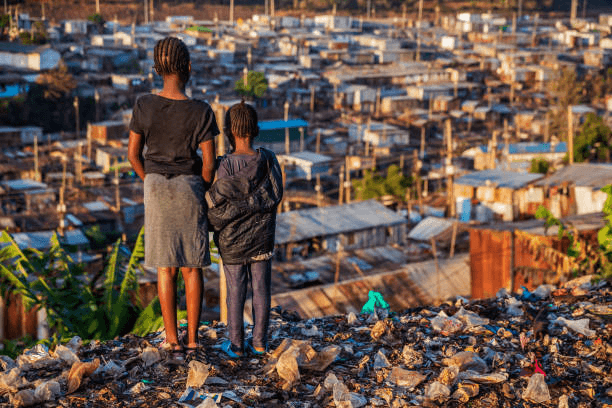
Many developing nations, especially in African regions, exhibit informal settlements as their fundamental component of urban development. Urbanization evolves at an unprecedented pace while governments fall behind in developing housing infrastructure, thus millions of people choose underserved and unplanned neighborhoods, which repeatedly expose them to vulnerable possession rights and deficient essential services and a substandard living environment. Informal settlements show capability for survival and develop resilient local networks and pioneering methods that aid their residents’ sustainability.
This article examines how informal settlements will evolve by studying both prevailing obstacles alongside revolutionary improvement strategies that enable them to merge into official urban development frameworks. Through two successful case studies in Kenya and Brazil, the article demonstrates how specific strategies develop inclusive urban development that remains sustainable and equitable.
Challenges Facing Informal Settlements
The social and economic importance of informal settlements stands in opposition to various structural and legal, and environmental barriers that restrict their sustained development.
- Insecure Land Tenure: Informal settlements experience severe legal challenges because residents lack legitimate property titles that would enable home and community development investments as well as traditional credit possibilities. Lacking proper property rights systems causes residents to face repeated eviction threats alongside conflicts over land property rights, as well as municipal planning exclusion.
- Limited Access to Basic Services: The residents of informal settlements face difficulties in receiving clean water and proper sanitation, and transportation of electrical power and waste disposal services. The inadequate infrastructure remains harmful to health by enabling contagious diseases, including cholera, as well as respiratory infections. The absence of proper educational and healthcare centers drives residents into marginal status.
- Environmental and Climate Risks: Most informal housing clusters establish their settlement areas in regions that face environmental dangers, including near flood-prone lands and steep slopes, and industrial spaces, and hazardous zones. Hackney Wick, along with similar neighborhoods, experiences elevated vulnerability to environmental dangers because of their location in danger zones that suffer from pollution and faulty drainage systems.
- Socioeconomic Exclusion: Informal settlement residents encounter discrimination together with a lack of employment and restricted economic opportunities, because of their disadvantaged position. Workers who earn their income through informal activities lack both employment guarantees and public protection benefits, because of which they stay trapped in poverty cycles.
Innovative Approaches to Address Informal Settlement Challenges
Various new strategies are now helping officials solve informal settlement problems while building inclusive cities across urban areas:
- Community Mapping and GIS Technology: Accurate planning of informal settlements becomes possible through the application of Geographic Information Systems (GIS) technologies. The collection of data through this method permits teams to recognize service deficiencies so they can design infrastructure improvements and create formal land ownership systems. Food mapping programs started by the community members grant residents the power to participate in decision-making activities throughout the planning stages.
- Participatory Planning and Co-Design: The inclusion of residents during planning decisions provides solutions that address their essential requirements. Public engagement through design workshops, stakeholder meetings, and co-housebuilding brings together residents to establish urban areas with inclusive characteristics that are both sustainable and culturally suited for the community.
- Affordable and Sustainable Housing Solutions: Employing modular housing techniques and methods using bamboo along with earth materials and automated 3D-printing technology provides cheap, environmentally compatible solutions to upgrade slum districts. Dwellers enact incremental housing projects successfully with municipal assistance as they construct their homes step by step in numerous urban areas.
- Public-Private Partnerships (PPP) and Policy Interventions: The financing of housing projects together with infrastructure development and service delivery comes through a partnership between public authorities and private sector enterprises with NGO support. Urban development becomes sustainable through municipal policies that establish ways for informal settlements to join municipal structures through regularizations and inclusive zoning regulations.
Case Studies: Success Stories in Informal Settlement Upgrading
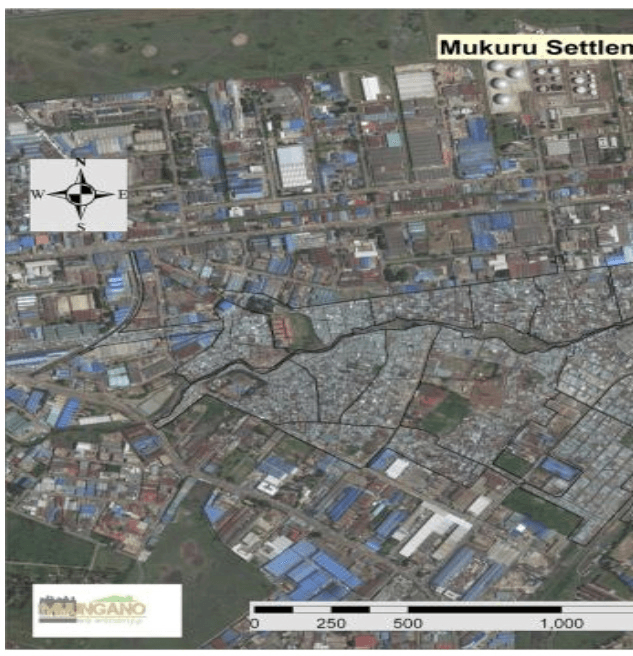
1. Mukuru Special Planning Area (Kenya)
Mukuru is home to some of Nairobi’s largest informal settlements, totaling around 10% of the city’s population. For several years, many organizations have been leading efforts to support residents in Mukuru to improve their living conditions. Since 2012, the International Development Research Centre (IDRC), from Canada, supported two rounds of research in Mukuru to identify practical knowledge and solutions to a host of challenges related to informal land tenure, governance, and human rights related to access to basic services.
This has contributed directly to initiating the largest urban upgrading effort globally, covering 650 acres and benefiting over 100,000+ urban poor households.
Through ongoing engagement with Nairobi County, the county government declared a Special Planning Area for Mukuru in 2017, which froze all development in the settlement. During the second round of research, 2016-19, the team developed an integrated plan to redevelop Mukuru, with a consortium of 40+ organizations. The Kenyan government is now implementing the plan, as part of a high-level political response to Covid-19.
These developments have helped many residents of Mukuru to ‘catch the dream’ of one city for all. However, the planning process is still not complete, and much work lies ahead to make the dream a reality. For instance, resolving questions related to privately held lands in Mukuru requires urgent resolution.
Over 40 organizations worked with Nairobi County on the SPA planning process — from academics and civil society groups to government officials, utilities agencies, and private firms. Their consultation and planning work was organized into 8 consortiums. Each consortium was led by a corresponding department from Nairobi’s County Government.
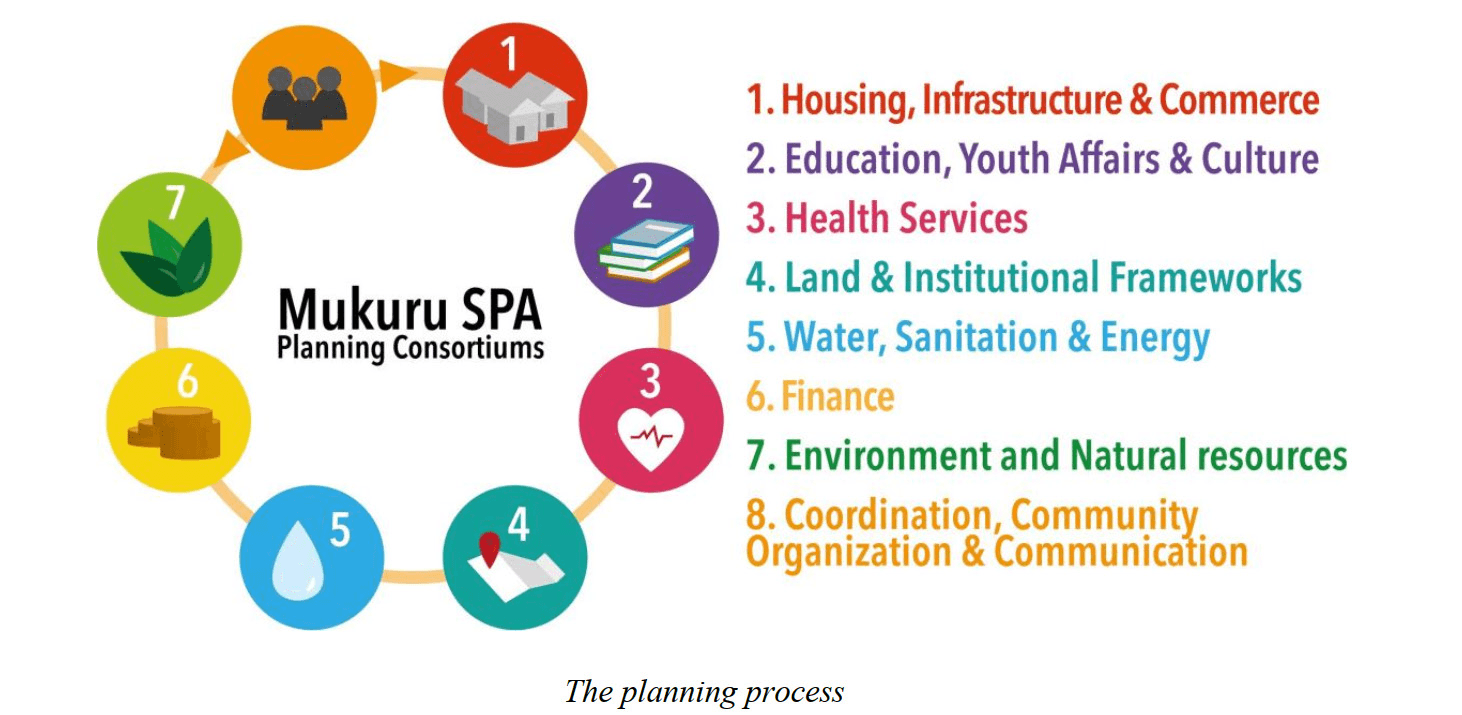
The planning process
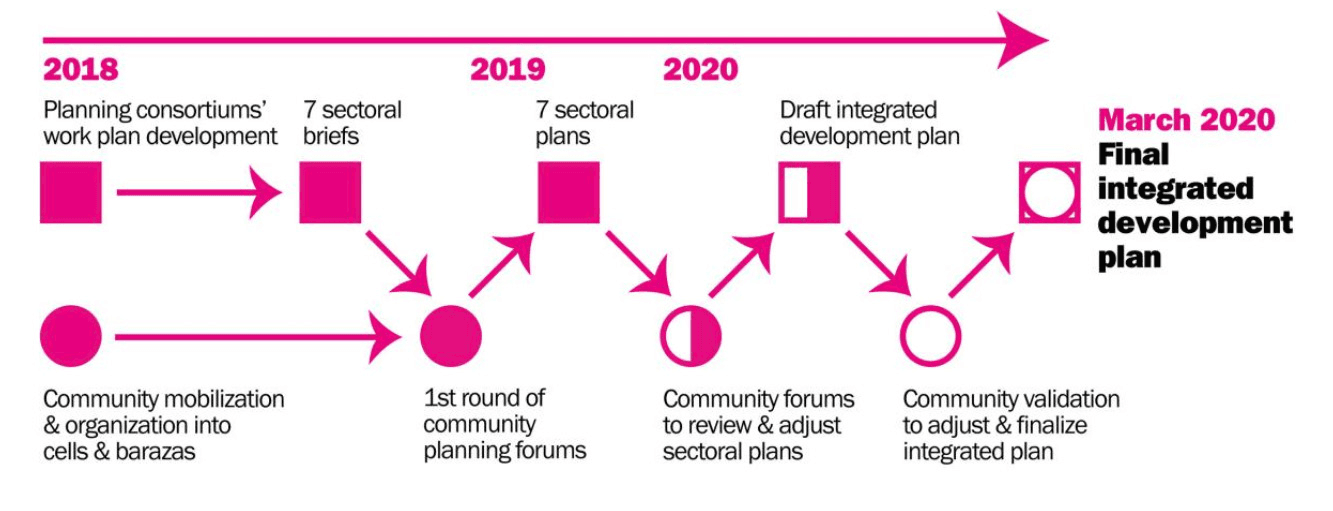
Each consortium contributed to the inclusive integrated development plan by: collecting and analyzing situational data, consulting the community and seeking feedback on draft proposals, and developing solutions that integrated community knowledge and aspirations with finance, legal, and spatial realities.
The Nairobi County Government established Mukuru as a Special Planning Area (SPA) in 2017, while making it one of Kenya’s biggest informal settlements. Integration planning processes became possible through this designation to coordinate the development of housing together with infrastructure and social services systems. Key achievements include:
- Countless residents received formal rights to the land they inhabited.
- Implementation of sustainable water, sanitation, and waste management systems.
- People from the community actively take part in development planning and management.
2. Favela Upgrading Program (Brazil)
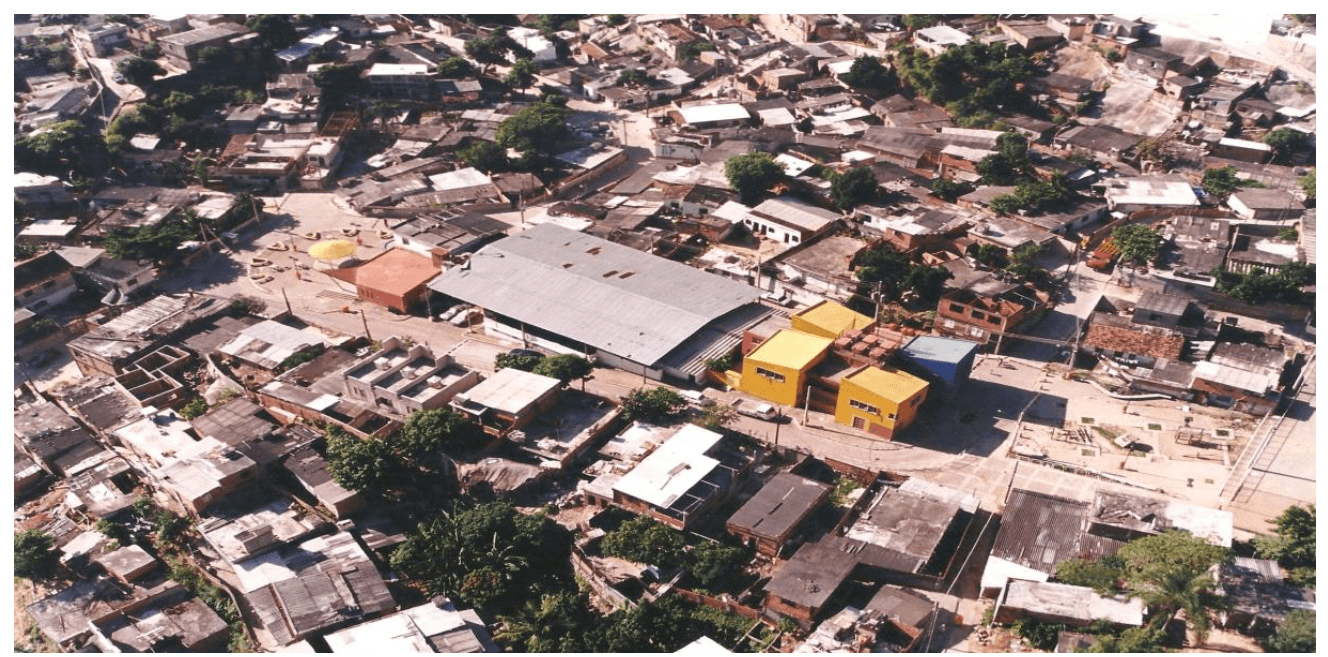
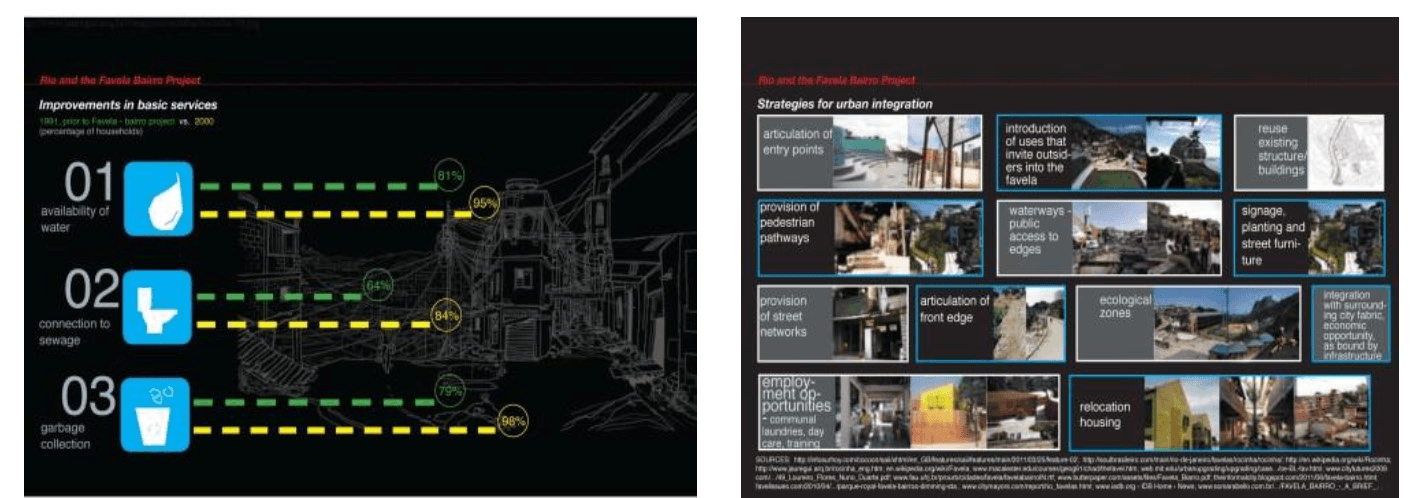
The Favela Upgrading Program of Brazil focused specifically on Rio de Janeiro and São Paulo, has demonstrated effective improvements to informal settlements. By implementing the program Favela Bairro (from slum to neighborhood) is a policy conceived and implemented by the Government of the City of Rio de Janeiro in 1994.
This program received national and international recognition because of its efficient state intervention in urban housing through government investment. The program aims to integrate slums into the legal city by providing access for the population of the favelas to basic urban and social services, as well as the regularization of its public and private spaces.
Completing or constructing the key main urban infrastructure which includes:
- Providing environmental changes that make the favela look like a “normal” neighborhood. Introducing visual symbols of the formal city as a sign of identification as a neighborhood: paved streets, plazas, urban furniture and public services.
- Consolidating the insertion of the favelas into the planning process of the city.
- Implementing activities of a social nature, such as setting up daycare centers for children, income generation projects, training programs, and sports, cultural and leisure activities.
- Promoting the legalization of land subdivision and providing individual land titles.
Due to high density and the consolidated nature of the favela’s buildings, the designers employed three basic principles for their plan:
- To pay special attention to the boundaries between the favela and the surrounding area and to emphasize points of entry from Avenida Niemeyer.
- To penetrate the favela with a street system that would break up the traditionally introverted orientation of the area, facilitate multiple connections between new spaces and social functions and permit vehicular access to the highest areas.
- To create, in this peripheral space, a development pole that would echo the quality of the existing image in the border zone along Avenida.
As the land is flat and part of the layout was planned and organized, the internal street system in the rear sections of the favela and along the railway line display a certain regularity. The key focus of development for the project was the irregular and curvilinear course of the Faria River, which turned into a virtual mud hole during the rainy season. The channeling of the river and the creation of a canal-side avenue with trees were the basic elements of the transformation of the favela.
Infrastructure investments in roads, drainage, and sanitation were made. The programs concentrated on providing education together with health services and job opportunities. The inclusion of informal communities into the formal urban design does not involve forced population displacement from their current settlements.
Future Pathways For Informal Settlements
Numerous cities must combine informal and formal urban structures during the upcoming years if they want to achieve inclusive urban areas that demonstrate resilience. Future approaches should focus on:
- Inclusive Urban Planning: Municipal master plans need to officially include informal settlements as real urban areas. The development of informal settlements depends on combined zoning between residential and commercial uses and adaptable building rules and tax strategies that support their evolution.
- Smart Technologies And Digital Inclusion: The integration of technology into service delivery and mobile banking, as well as digital land records and online education services, improves life quality within informal settlements.
- Climate-Resilient Infrastructure: The installation of sustainable infrastructure components such as water-collection facilities and flood-safe homes, and renewable power stations will assist slum areas in managing climate shifts.
- Strengthening Social And Economic Inclusion: The implementation of vocational training programs with microfinance services and business support services will enable residents to gain better economic empowerment.
Conclusion
Affected informal settlements will become sustainable, resilient cities that integrate with urban communities in the future. The transition between informal settlements and formal urban systems can be achieved by collaborative planning techniques and creative technologies, and beneficial policies crafted together by stakeholders and governments. Proper support for Kenyan and Brazilian informal settlements, as shown through case studies, leads to their transformation into thriving communities, which boost citywide social and economic development across the world.