


A significant milestone in the development of Kenya's space sector was reached in 2024 when the Kenya Space Agency (KSA), in partnership with the Research Institute for Innovation and Sustainability (RIIS), and supported by the United Kingdom International Development (UKID) through the Research and Innovation Systems for Africa Fund (RISA Fund), undertook an Ecosystem Maturity Assessment (EMA).
The assessment was designed to evaluate the current state of Kenya's space innovation ecosystem and inform the development of a comprehensive roadmap for the sector. According to the Engagement Manager at RIIS, Yankho Likaku, this exercise demonstrates that Kenya is no longer at the stage of asking whether a space ecosystem exists; rather, the focus is now on strengthening and scaling what has already been established.
The partnership between RIIS and KSA has already yielded tangible outcomes, including the assessment of Kenya's space ecosystem maturity, the development of a roadmap for the sector, increased awareness and engagement through initiatives such as Kenya Space Week, expansion of outreach efforts beyond Nairobi to regions such as Laikipia, advancement of Communities of Practice (CoPs), development of a Data Governance Framework, and progress on initiatives such as the Africa Earth Observation Fund and the Africa SpaceTech Fund.
Leveraging Kenya's Unique Strengths
One of Yankho's strongest messages was that Kenya should avoid measuring its progress solely against other countries. Instead, the country should identify and leverage its own competitive advantages.
Kenya's greatest strength lies in collaboration. The success of the Ecosystem Maturity Assessment itself is evidence of what can be achieved when government agencies, development partners, research institutions, and private-sector actors work together. Rather than focusing on where other nations may be ahead, Kenya should continue building partnerships that allow the ecosystem to grow organically and sustainably.
This collaborative approach can also be extended across Africa. Different countries possess different strengths, and regional partnerships can help lower costs, share expertise, and accelerate innovation. For example, countries with strengths in manufacturing space components can complement countries with strengths in data services, research, or applications development.

Space Is for Everyone
Yankho emphasized that the space sector is far broader than many people realize.
There is a common misconception that careers in space are reserved for aerospace engineers or individuals with highly specialized technical degrees. In reality, the sector requires expertise from multiple disciplines, including data science, software development, business, policy, communications, education, environmental sciences, and entrepreneurship.
Importantly, many contributors are self-taught professionals who have developed skills through practical experience and continuous learning. Expanding participation in the space sector therefore requires greater awareness of the diverse opportunities available and lowering barriers to entry for new talent.
Strengthening Investment and Innovation
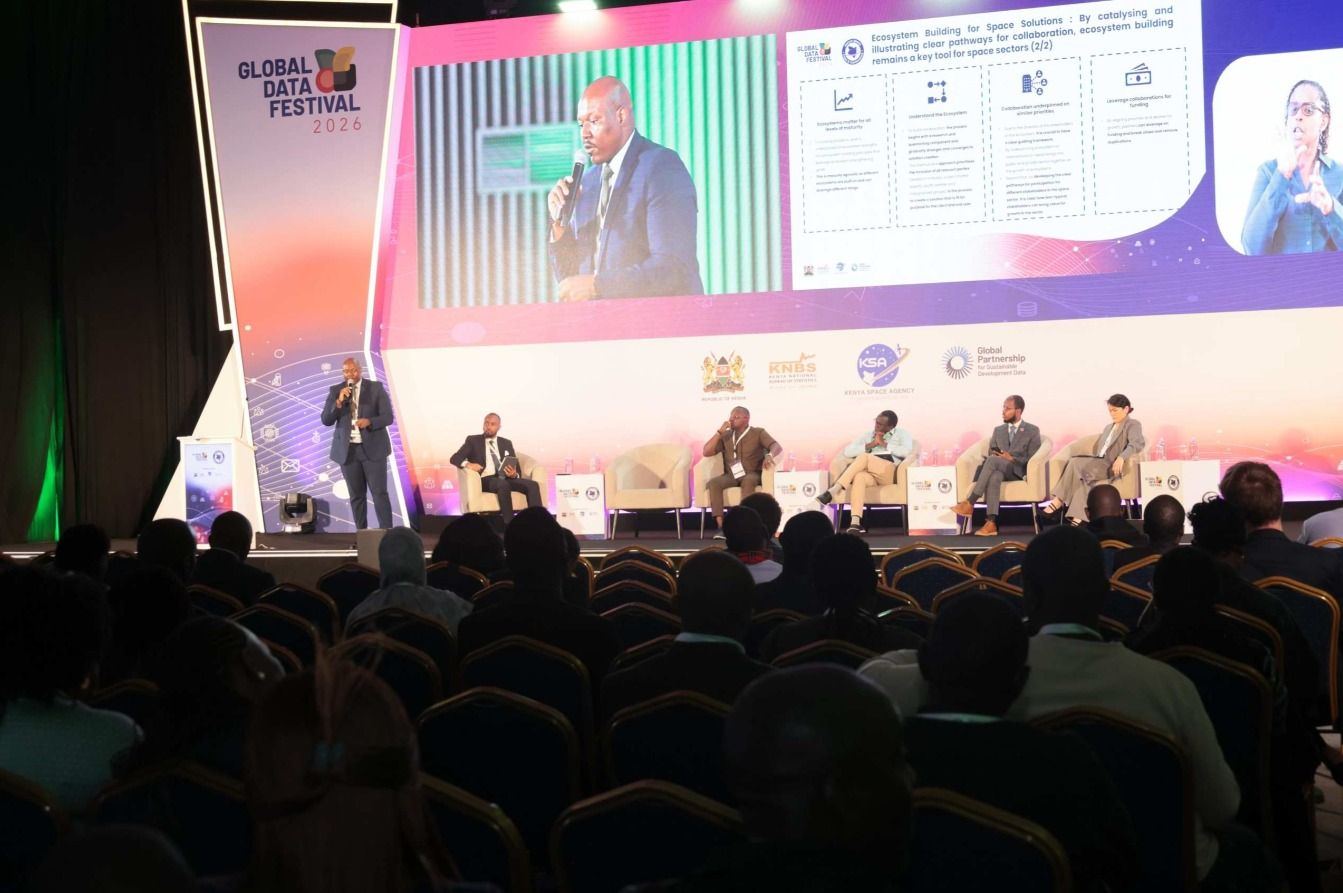
Speaking during a panel discussion on "Strengthening Investment and Innovation Across the Space Ecosystem" at the Global Data Festival x Kenya Space Expo and Conference, Yankho highlighted the significance of the word "strengthening."
The term implies that innovation and investment already exist within the ecosystem. The challenge is not creating them from scratch, but reinforcing and scaling existing efforts.
He described innovation as a culture of thinking and a mindset that encourages creativity, experimentation, and problem-solving. However, innovation cannot thrive without investment.
Investment plays a critical role because it sustains innovation. Without financial support for promising ideas and emerging ventures, innovative thinking struggles to translate into practical solutions and scalable businesses.
For investment to flow effectively, stakeholders must focus on the broader ecosystem, including skills development and human capital, institutions and support structures, collaboration networks, access to funding opportunities, and mechanisms for knowledge sharing and mentorship.
Every stage of ecosystem maturity matters. Early-stage initiatives, emerging startups, established organizations, and supporting institutions all contribute to the overall health of the ecosystem.
Education and Implementation Must Happen Together
Another key insight was the importance of educating while implementing.
Many ecosystem development initiatives focus heavily on awareness and capacity building before action takes place. Yankho argued that learning and implementation should happen simultaneously.
As projects are developed and deployed, stakeholders should continue educating participants, building skills, and sharing knowledge. This creates a more sustainable ecosystem capable of supporting itself over the long term.
He also stressed the importance of considering scalability from the outset. Initiatives should not only solve immediate challenges but should be designed with future growth and sustainability in mind.
Builders, Funders, and Institutions Must Function as One System
Reflecting on discussions during GeoHabari's "Builders Reality Room" segment at the Global Data Festival X Kenya Space Expo and Conference, Yankho reflected on the need for builders, funders, and institutions to work together as a connected ecosystem rather than as separate groups.
He identified major challenges within the Kenyan ecosystem, particularly the disconnects between these stakeholder groups.
Institutional Capacity: Many institutions lack the capacity needed to effectively support innovation and emerging technologies. Strengthening institutional capabilities is therefore essential for ecosystem growth.
Investor Readiness: Funders typically require proof of concept, demonstrated business viability, clear value propositions, and convincing business cases. Innovators often possess strong technical ideas but struggle to communicate them in ways that attract investment. Entrepreneurs therefore need support in developing compelling pitches and demonstrating market potential.
Practical Skills Development: Yankho emphasized that talent development should go beyond theory. People need exposure to real-world projects and practical experience because the realities of implementation are often very different from classroom learning. Creating opportunities for hands-on work is therefore critical to building a skilled workforce.
Enabling Policies: Policies should enable innovation rather than restrict it. Regulatory frameworks must create space for experimentation and forward-thinking ideas while still providing appropriate governance. Policymakers should avoid creating barriers that discourage innovation or prevent people from exploring new possibilities.
From Consumer to Producer of Space Innovation
According to Yankho, there is no single factor that will determine whether Africa becomes a producer of space innovation rather than merely a consumer.
Success will depend on multiple interconnected factors, including skills development, investment, collaboration, strong institutions, supportive policies, market development, and access to infrastructure.
Most importantly, Africa should move away from a mindset of comparison and competition and instead embrace collaboration. The continent's diversity of strengths presents opportunities for countries to work together, share resources, reduce costs, and accelerate innovation. Through collaboration, African nations can build a stronger and more resilient space ecosystem capable of creating solutions for local and global challenges.
Key Takeaway
Yankho's central message is that Kenya's space ecosystem already exists and is making measurable progress. The focus should now be on strengthening what has been built through collaboration, investment, skills development, practical implementation, and supportive policies. Innovation must be cultivated as a culture, investment must sustain that culture, and collaboration must connect the various actors within the ecosystem. By leveraging its strengths rather than comparing itself to others, Kenya can continue building a vibrant and sustainable space sector while contributing to the broader growth of Africa's space economy