
Beyond Buildings: Digital Storytelling as a New Language for Architecture
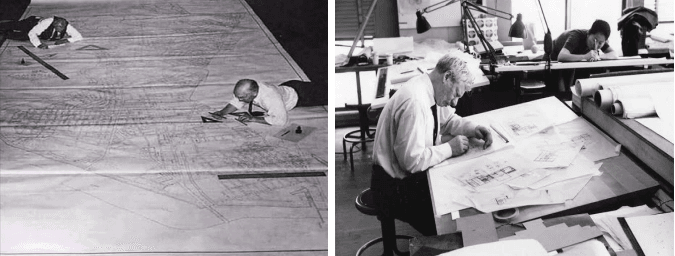
Representation has traditionally been considered a key aspect of architecture. During the course of history, these tools have been used to convey ideas in the built environment: sketches, plans, sections, elevations, physical models, and renderings. These tools have proven to be invaluable in the process of bringing concepts to life. However, although these architectural representations are technically sophisticated, they are frequently unable to convey one important aspect of architecture.
Buildings are more than just physical structures. They hold memories, culture, identity, and human experience. All structures are located in a larger social, historical, environmental, and spatial context. Thus, the making of spaces is not the only aspect of architecture; it is also the stories that are told within and through them.
Digital technologies have changed the way that architects are telling these stories. New tools such as Geographic Information Systems (GIS), Story Maps, Building Information Modeling (BIM), digital twins, virtual reality (VR), and augmented reality (AR) bring new possibilities of storytelling about places in richer and more meaningful ways. All these innovations are creating a new language for architecture, a digital story language.
Digital storytelling is more than just drawings and technical documentation of architecture. It combines spatial information, multimedia, and text, human experiences, historical records, and interactive visualization in coherent narratives, enabling a variety of audiences to understand, interact with, and contribute to the built environment.
However, the adoption of digital storytelling in the field of architecture is a space with new possibilities, as African cities are increasingly experiencing a lack of documentation for their heritage, the difficulties of engaging with communities, the need for more planning information, and a lack of inclusiveness in urban futures.
A Digital Storytelling Approach to Understanding Architecture
Digital storytelling is the process of using digital technologies to create, present, and share stories. In the field of architecture, it is the integration of spatial data with visual, textual, auditory, and interactive components to tell the story of a place, project, or community.
Typical architectural communication is on the appearance and operation of a building. When expanded to digital storytelling, the focus is broadened to questions about the purpose of the building, who uses it, what historical events influenced it, how it affects its surroundings, what it does to its surroundings, what experiences it produces, and in what ways it might change over time.
Answers to these questions create narratives that enhance the understanding of architecture. Digital storytelling allows architects to share the architectural process rather than the result. Its interactive nature will give audiences some insights into design decisions, environmental factors, social effects, and cultural values.
This is significant because the role of the architect is becoming more and more important to satisfy the needs of the stakeholder that might not have technical design knowledge. More accessible means of understanding complex projects are often needed for communities, policymakers, investors, conservationists, and the public.
The Convergence of Architecture and Geospatial Technologies
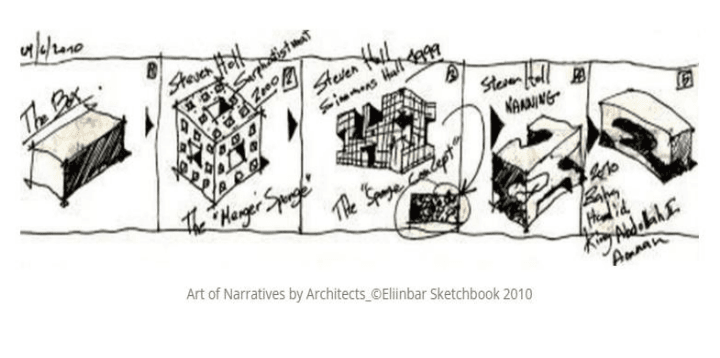
The new technologies of geospatial have greatly boosted the use of digital storytelling in architecture.
Architecture is not a standalone phenomenon. Each building is situated in a particular place, it is part of a larger system of buildings, and it deals with the environment. Geospatial technology is a tool to enable the understanding and communication of these relationships.
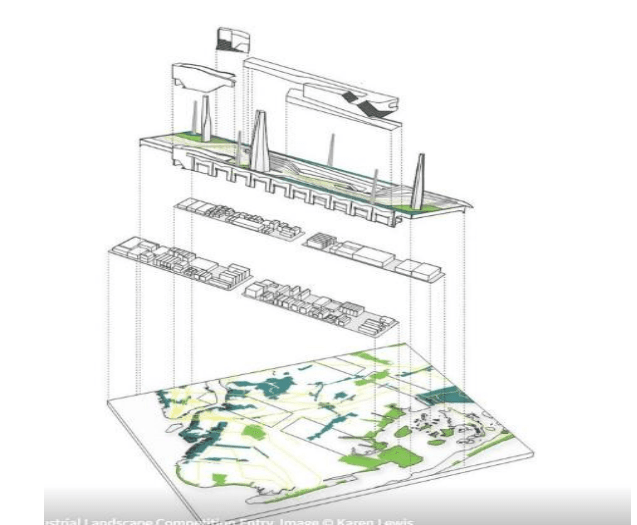
GIS platforms enable architects and planners to visualize spatial relationships, demographic patterns, infrastructure networks, environmental conditions, and historical transformations. Combining architecture with geospatial information enables architects to tell stories about the relationships between buildings and the space that surrounds them.
For instance, a housing development might be delivered not just as buildings, but as a larger story involving population growth, transportation accessibility, environmental sustainability, community development, and economic opportunity. The resulting story is complete and more interesting than just architectural drawings.
Story Maps: Architecture through Narrative Geography
The Story Map is one of the most effective resources available to today's digital storyteller. Story Maps are a combined map, text, images, videos, and interactive content story. They allow users to investigate locations while engaging with stories of the locations.
As an architect, your job is to convey the spatial aspects of design projects, and Story Maps provide an innovative means of doing just that.
A Story Map can be created to explain, for example, a heritage restoration project by presenting historical timelines, architectural evolution, community memories, conservation interventions, current conditions, and future preservation strategies.
Instead of presenting information in a single report, Story Maps tell a story about a place, leading viewers on an immersive journey. Story Maps are especially relevant in Africa for documenting cultural landscapes, indigenous settlements, colonial architecture, and rapidly changing urban environments. Combining geospatial information with local stories, Story Maps can help preserve architectural heritage for future generations.
Digital Twins of the Built Environment
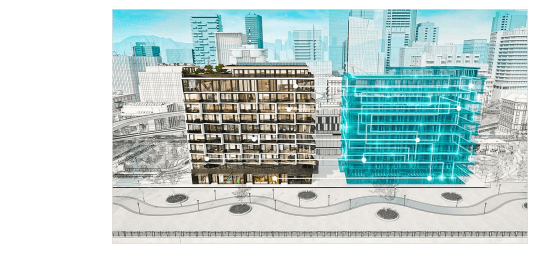
Digital twins are one of the most important things that have happened in the field of communication in architecture. A digital twin is a representation of a physical asset, building, or city that is dynamically simulated in a digital environment. In contrast to traditional 3D models, digital twins continuously take in real-world information from sensors and monitoring systems and from operational networks.
The storytelling aspect of digital twins takes architecture from a "thing" and adds a "tale". They facilitate observation of the behavior of structures through the seasons, the action of structures throughout the year, patterns of occupancy, energy consumption trends, environmental impacts, maintenance requirements, and urban growth dynamics.
A digital twin can help tell the story of a building throughout its life cycle. Digital twins provide opportunities for the rapidly expanding African cities to learn about their complexity in ways never before. The platforms can be used by municipal authorities, planners, and architects for visualizing future scenarios, assessing interventions, and presenting development strategies to the public. Digital twins are not just about the city today, but about the city tomorrow.
Heritage Documentation and Cultural Memory
Collective memories are the essence of communities and nations, and are expressed in historic buildings, cultural landmarks, and traditional settlements. But urbanization, environmental decay, conflict, and neglect still pose a danger to many heritage assets in Africa.
Digital Storytelling offers strong tools for heritage conservation. Through technologies such as GIS mapping, photogrammetry, laser scanning, 3D reconstruction, drone imagery, and virtual reality, architectural heritage can be digitally documented, preserved, and shared.
Digital archives can be used to connect communities with heritage sites without access to physical sites. Moreover, storytelling methods go beyond the physical to preserve the cultural story, the oral history, and the personal experience. Conservation is no longer the sole domain of conservationists. Digital Storytelling gives all communities a voice in preserving cultural memory.
Community Engagement and Participatory Design
The one thing about digital storytelling that has been most life-changing is the way it has allowed everyone to communicate about architecture. Architectural discourse has been dominated in the past by technical experts. The translation of drawings, plans, and specifications may be challenging for non-specialists, which means that they are not able to participate in the design process.
Digital Storytelling alters this.
Architectural information is more accessible to a wide audience through interactive maps, visual narratives, immersive simulations, and virtual walkthroughs. Proposed developments can be understood by the community, and input can be offered.
This is a participatory process particularly relevant in an African context where the development of urban areas regularly meets issues of land rights, informal settlements, cultural heritage, and the importance of social equity. Digital stories provide communities with a way to visualize, experience, and comprehend proposed changes, thereby increasing transparency and trust between designers and communities. The outcome is improved communication and improved responsive and inclusive architecture.
VR and AR: Immersing in Stories before Construction
Architectural visualization is changing with the introduction of Virtual Reality and Augmented Reality. Traditional renderings offer a moment-in-time view of buildings that are yet to be built. VR and AR, however, enable users to visit spaces in the absence of their physical construction.
The hands-on aspect adds a wonderful storytelling ability to the program. When students are placed in a simulated environment, they can communicate with the architects about spatial qualities, user experiences, environmental conditions, circulation patterns, and emotional responses.
One way to think about a school design is to design through the eyes of the student. The hospital can be experienced as the patient's experience. The public space can be assessed through the eyes of a community member. Then, architecture becomes a story beyond the scene; it is an experience story. With the advent of low-cost VR and AR solutions, these technologies will be integral to architectural communication in Africa and the rest of the world.

Data, Narratives, and Human Experience
Technology may be a means, but storytelling is a medium. Successful electronic storytelling programs are not necessarily about the technology. Rather, they focus on meaningful stories based on human experiences. Patterns that can be seen in the spatial data can be explained through stories.
Maps can illustrate places that people reside, and narratives can illustrate ways in which places are experienced. Stories convey how buildings affect lives, and models represent buildings.
Future architecture, thus, will require not only the data collection, but also the interpretation and communication of the data in ways that will connect with people. The days of the architect as a traditional practitioner of a single discipline are over, and skills more often associated with journalists, filmmakers, historians, and storytellers are becoming a necessity. The profession is shifting from building design to place design, identity design, and human experience design.
Ethical Challenges and Challenges Arise
However, some challenges need to be addressed with digital storytelling.
There is still a high level of concern over data quality, since misleading narratives can be generated if the information is inaccurate or incomplete. There could also be digital inequality in terms of storytelling platforms, especially in areas with poor technology infrastructure. Narratives that include user-generated data, location, or behavioral analytics can also raise privacy concerns. In addition, polished visualizations have the potential to focus more on persuading than transparency.
Digital Storytelling, however, must be kept ethical, inclusive, and evidence-based; therefore, the architects and the geospatial professionals should make sure that it is thus. The use of technology should be to enhance understanding, not shape perception.
The Future of Architectural Communication
Architectural form is becoming more and more story-driven.
The use of artificial intelligence, geospatial analytics, digital twins, extended reality (XR), and cloud-based collaboration is opening new doors to storytelling. Other potential future architecture projects could include interactive digital companions, real-time urban narratives, AI-generated spatial stories, community-generated place histories, immersive heritage experiences, and predictive city storytelling with a city digital twin.
Within this new context, architecture will exist beyond buildings and be known through the narratives that those buildings tell. The future architect will thus be a designer of space, but also a curator of experiences, communicator of spatial knowledge, and storyteller of human environments.
Conclusion
Digital storytelling is a huge paradigm shift in architectural communication. When combined, geospatial technologies, digital twins, StoryMaps, immersive visualization, and community stories can help architects shift from traditional representations to more comprehensive and engaging forms of representation.
Digital Storytelling is an effective means for understanding and shaping the built environment, particularly in a rapidly urbanizing Africa, where there are a host of issues concerning growth, heritage conservation, sustainability, and social inclusion that make it a challenge to address them.
Architecture has been telling stories for all time. The difference now is that these stories can be far more interactive, more accessible, more data-driven, and more participatory than ever before, thanks to digital technologies.
The current boundaries between architecture, geospatial science, and digital media are less distinct than ever, and one thing is certain: the future of architecture is not just in what we build, but in what stories we tell.